Why the same domain costs $180 on one marketplace and $600 on another
You find a domain at $180. A week later the same domain is $600 somewhere else. Nothing about the site changed. Here's what did.
Published July 29, 2026
This is the single most common thing people notice when they start comparing link sources, and it's usually taken as proof that someone is ripping them off. Sometimes that's exactly right. Often it isn't, and the difference is worth understanding before you assume.
1. You're not buying the same thing
The most frequent explanation, and the least interesting. The $180 listing is a link placed in an article you supply. The $600 one includes a writer, an editor, revisions and a guarantee the URL stays live for twelve months.
Before comparing any two prices, check what's bundled: who writes the article, how many revisions, whether the link is dofollow, whether there's a removal guarantee, and how long it's guaranteed for. Two prices for a placement are rarely two prices for the same placement.
2. Someone is a reseller of a reseller
Link inventory is traded. A publisher sells to an aggregator, the aggregator lists on a marketplace, an agency buys from the marketplace and bills a client. Each hop takes a margin, and none of them are visible from the listing.
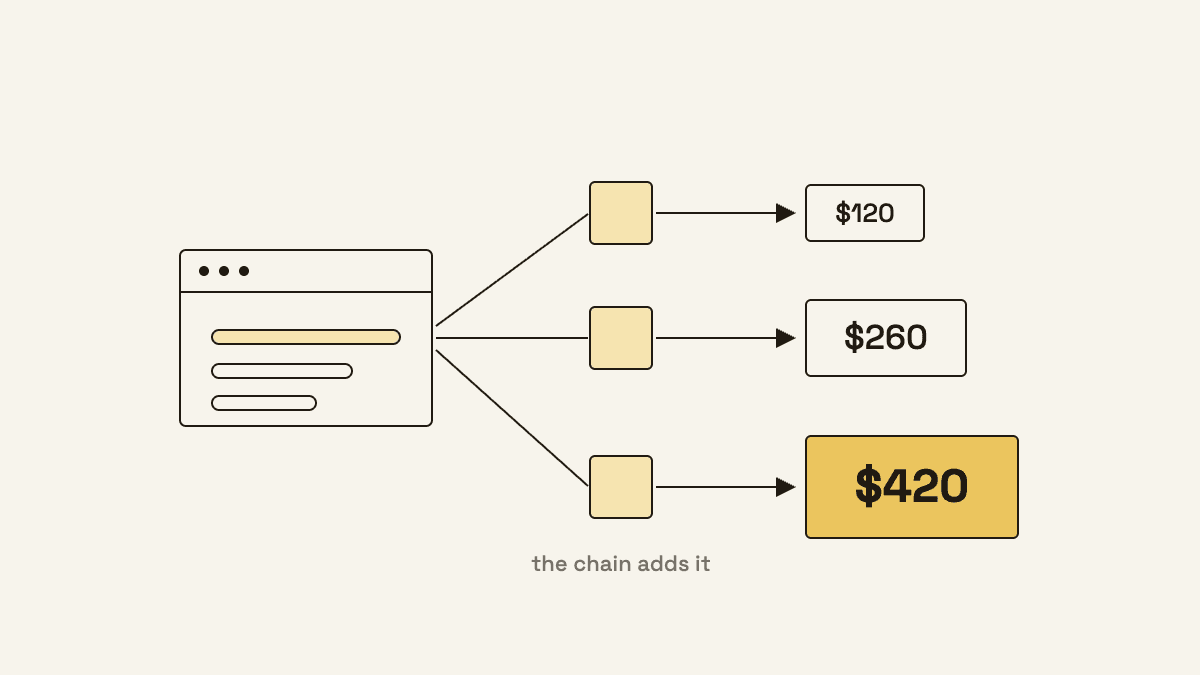
Three hops turns a $120 publisher fee into $600 without anyone doing anything unusual. This is the honest mechanical answer to most large gaps, and it's why the publisher's own price is the only number worth anchoring on.
3. The niche is priced into it
Many publishers quote by topic. A general-interest post is $180; the same slot for a finance, insurance, crypto or gambling client is $600 or more.
That's not arbitrary. Those niches carry regulatory attention, the publisher takes on more risk hosting them, and the buyers have larger budgets. If you're comparing a general listing to a quote you were given for a regulated client, you're comparing two different products.
4. The listing is stale
Publisher prices move. A site that grew its traffic threefold in a year raises its rate; a site that lost a core keyword drops it. A marketplace that refreshes its catalogue monthly and one that refreshes it annually will disagree about the same domain, and only one of them is currently right.
A stale low price is worse than a stale high one, because you'll find out at fulfilment — either the order fails or you get quietly upsold.
5. Volume terms
An agency placing forty links a month on the same publisher has a rate you don't. That's ordinary commerce, and it's the one reason on this list where the gap reflects something real rather than something hidden.
How to check any quote in about a minute
- Ask what's included — writer, revisions, dofollow, guarantee length.
- Ask what the publisher's own fee is. The answer, or the refusal, is informative.
- Compare against the going rate for that DR band rather than against the last quote you got.
- Check traffic, not just DR. High authority with no readers is the most common way a fair-looking price is bad value.
Check a quote against real ranges
Enter the price and DR and see where it sits inside the band for that authority level — using ranges from a live 225,000-publisher catalogue.
The underlying problem is that this market prices by information asymmetry. Every explanation above is legitimate, and every one of them is also available as a cover story. The only durable fix is seeing the publisher's price and the market median at the same time, which is what makes the question answerable instead of a negotiation.
See both numbers side by side
Every listing shows Linkova's price and the market median. Free to browse.